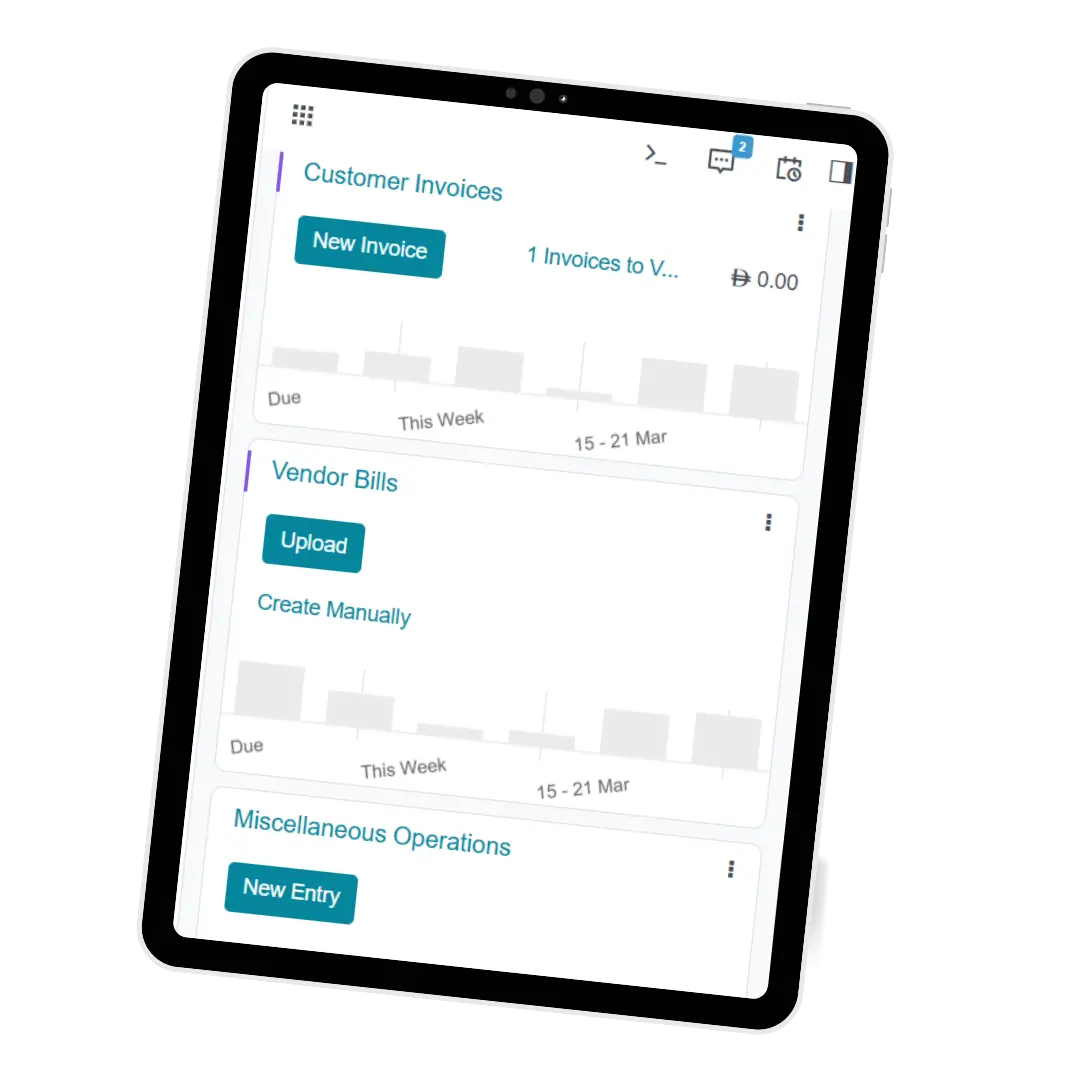
For most SMEs in the UAE in 2026, the best ERP system is the one that is FTA VAT-compliant out of the box, ready for WPS payroll, supports Arabic and the UAE dirham, and fits your per-user budget. There is no single winner that suits every company — the right choice depends on size, sector, and how far you want the system pre-configured for the UAE rather than custom-built.
The strongest options in the UAE market today are Xrero, Zoho, Focus Softnet, Tally Prime, SAP Business One, Oracle NetSuite, CrossVal, Horizon ERP and Sage. Here is an honest comparison.
Quick comparison table
| System | Best for | UAE compliance (FTA VAT / WPS) | Arabic | Approximate price (per user/month) |
|---|---|---|---|---|
| Xrero | UAE SMEs that want an all-in-one solution pre-configured for the UAE | Native FTA VAT + WPS built in | Full right-to-left support | From AED 99/month (≈ AED 83 paid annually) |
| Zoho | Micro and small businesses on a tight budget | FTA-accredited (Books) | Yes | ≈ AED 50+ (Books) |
| Tally Prime | Traditional trading and accounting | VAT yes; WPS limited | Partial | Perpetual licence (one-off payment) |
| Focus Softnet | Mid-market, regional know-how | Yes, built for the GCC | Yes | On quotation |
| SAP Business One | Larger SMEs / enterprises | Yes (through a partner) | Yes | Enterprise (high) |
| Oracle NetSuite | Mid-market / scaling enterprises | Yes (configured) | Yes | Enterprise (high) |
| CrossVal | Start-ups that need simple accounting | FTA-accredited | Yes | From ≈ AED 77 |
| Horizon ERP | High-volume trading and distribution | FTA-accredited | Yes | On quotation |
| Sage | Established finance teams | Yes | Limited | Mid to high |
Prices are approximate and change constantly — confirm them with each vendor.
How to choose an ERP system in the UAE
Start with your real problem, not a feature list. Most UAE businesses buy an ERP system to solve three things: filing the FTA VAT return, WPS payroll, and bringing accounting, inventory and sales into one system instead of moving between QuickBooks, Tally, Excel and WhatsApp. Judge every option against those three, then weigh the per-user price against how much of the setup the vendor does for you.
A practical rule: if you want a system pre-configured for the UAE and running within days, choose an all-in-one platform built in the UAE; if you have a developer and want heavy customisation, choose an open platform; and if you only need basic bookkeeping, a light tool such as Zoho Books or CrossVal may be enough.
Where each option fits
Xrero is an all-in-one cloud ERP system built specifically for the UAE: accounting, CRM, HR and WPS payroll, POS, inventory and more than 20 modules on a single database, with FTA VAT and Arabic/English configured from day one, from AED 99/user/month. It suits SMEs that want UAE compliance handled for them without a long implementation.
Zoho is the affordable cloud option for micro and small businesses; Zoho Books is FTA-accredited, although the wider Zoho One bundle gets more expensive as you add apps.
Tally Prime is still popular for traditional trading and accounting in the UAE; it handles VAT well but is weaker on native WPS payroll and on modern multi-module workflows.
Focus Softnet is a UAE-based ERP system built for the GCC, with strong regional support and Arabic, aimed at the mid-market. SAP Business One and Oracle NetSuite are the enterprise-grade options — powerful and scalable, but at a higher cost and with longer implementations. CrossVal and Horizon ERP complete the UAE picture: CrossVal for simple FTA-accredited accounting for start-ups, and Horizon for high-volume trading.
Frequently asked questions
What is the cheapest ERP software in the UAE?
Entry prices in 2026 typically start at around AED 50–99 per user per month for cloud SME platforms (such as Zoho Books, CrossVal and Xrero), while enterprise systems such as SAP and NetSuite cost far more. Always confirm the current price with the vendor.
Which ERP system is best for FTA VAT compliance in the UAE?
Any ERP system that is FTA-accredited or supports UAE VAT natively can file compliant returns. UAE-built platforms such as Xrero, Focus, Horizon and CrossVal, and the FTA-accredited Zoho Books, handle the VAT 201 form and TRN requirements out of the box.
Which ERP system supports WPS payroll in the UAE?
WPS support means the system can generate SIF files for UAE banks and handle Emirates ID rules, end-of-service gratuity and MOHRE. Xrero and Focus include WPS payroll natively; Zoho supports it through modules or integrations; Tally's native WPS support is limited.
Do UAE ERP systems support Arabic?
The UAE-focused options — Xrero, Focus, Zoho and SAP — support Arabic; Xrero and Focus offer full right-to-left Arabic support across screens, receipts and reports.
How long does an ERP implementation take in the UAE?
It ranges from a few days for pre-configured cloud SME platforms to several months for enterprise systems. Migrating from QuickBooks, Tally or Zoho typically takes 3 to 7 working days for a focused SME implementation.